Published:15/07/2007
Language:EnglishPages:141, Includes 37 plates, 2 in colour
BAR Number: S1659
Series: BAR International Series
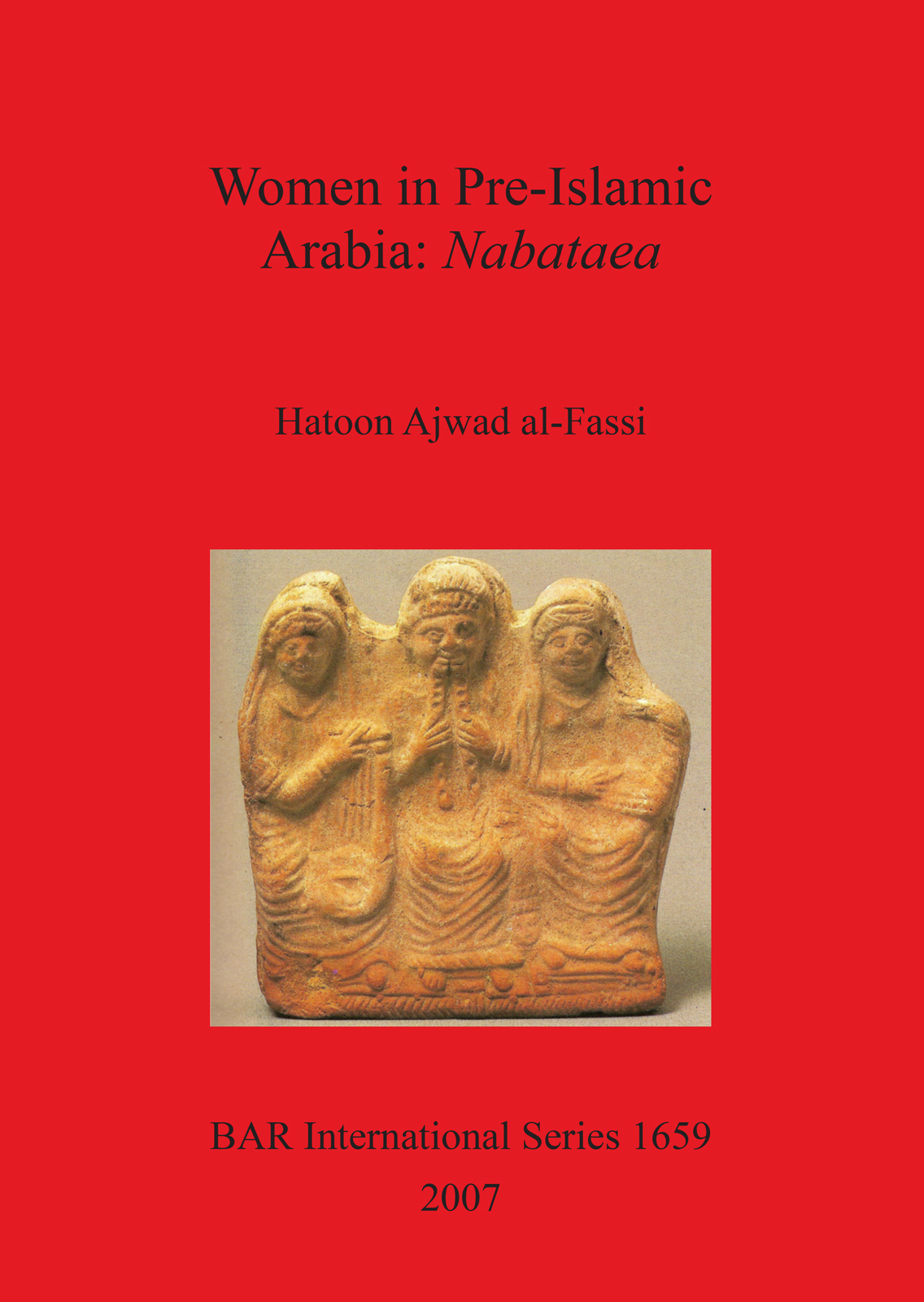
Women in Pre-Islamic Arabia: Nabataea
Written by Hatoon Ajwad al-Fassi
€33.60 – €42.00
Select format
Description
In addition to feminist studies, this work uses epigraphy, archaeology and classical sources, as well as recent developments in historiography, to understand Nabataean society and Nabataean women in particular. The author has highlighted to main study areas. The first is to investigate whether Nabataean women enjoyed a high status that was particular to their society and history. The second related enquiry is to investigate what made it possible for Nabataean women in the first century BCE-CE tobecome visible in inscriptions and numismatics (i.e. prominent in that period, place and time) In other words what are the factors that allowed women such status And were they factors particular to Nabataean women, their society or history A further interesting objective of this book is to question the assumption of subordination of women in pre-Islamic Arabia.
About the Author
Hatoon al-Fassi is a specialist in women’s history at King Saud University, Riyadh, Saudi Arabia. She received her Ph.D. from the University of Manchester. Dr al-Fassi’s research interests focus on women’s history (from ancient times to the present) and ancient Arabian history. She has written two books and numerous scholarly articles on these issues. She is also a newspaper columnist, writing on historical preservation, the human rights of women, and political and social reform. Originally from Makkah, she now lives in Riyadh with her husband and two children.Reviews
‘In her agenda-setting book, Dr al-Fassi brings to the subject of the role of women in ancient Arabia (a role which will surprise some and may disturb others!) a freshness of viewpoint which facilitates a substantial contribution to our understanding within a modern methodological
framework.’ Prof. John F. Healey
‘This is a distinguished work that introduces new ideas and blazes and new approach in the study of ancient Arabian history, and the history of women in particular. Written critically, is not about mere archaeological excavation, but excavation in the texts and ancient societies. That is why the results were unprecedented. I hope that this work will tempt and guide future research in ancient cultural and social history of Arabia.’ Prof. Abdel Rahman A. al-Ansary
‘I found particularly creative and attractive the two stories of “A Tale of Two Cities” on Hegra and Raqamu, as opening and closing the discussion, as they pull the reader into the more technical aspects and instil curiosity. In my opinion, this work is a jewel.’ Prof. David F. Graf