

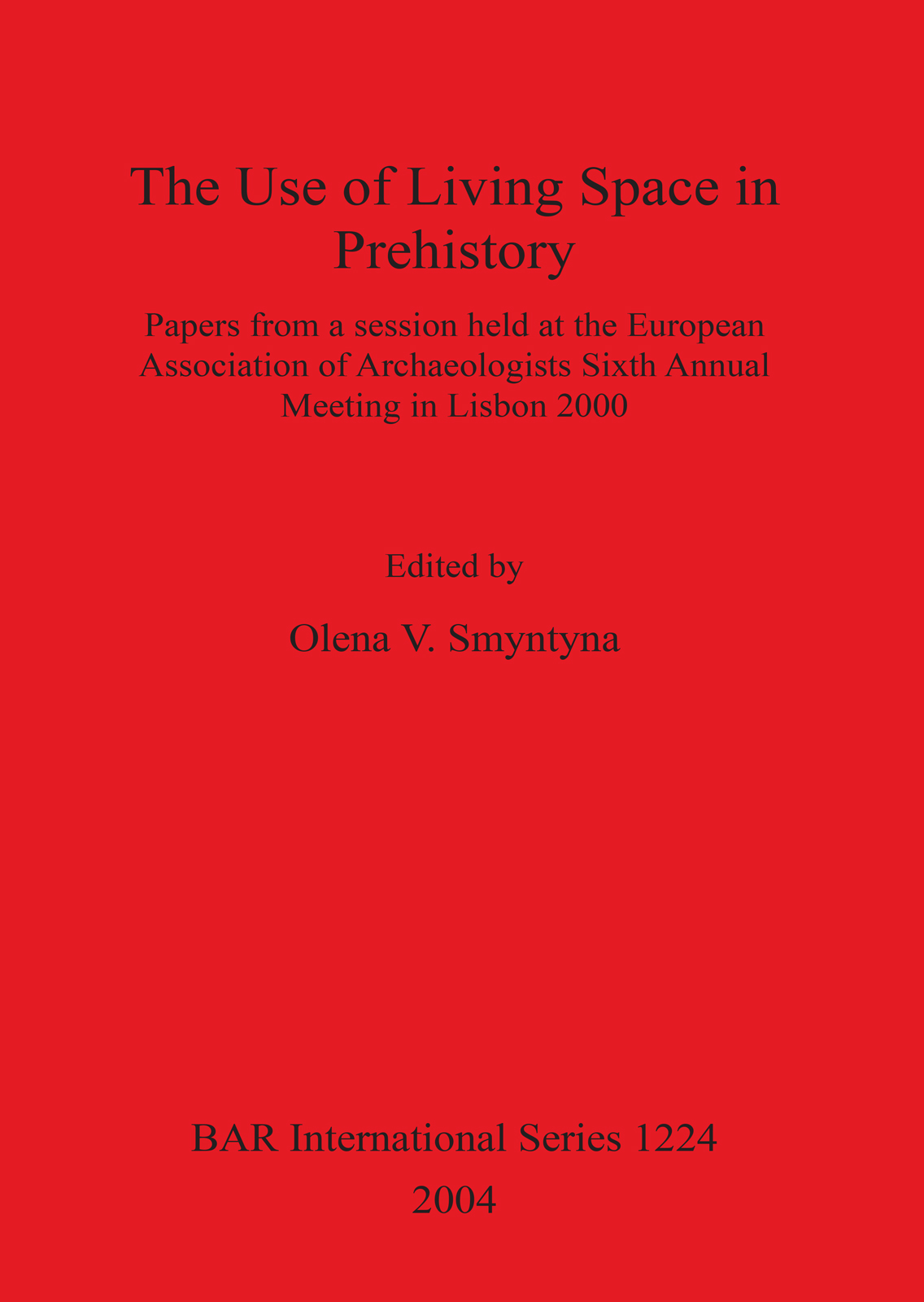
The Use of Living Space in Prehistory
Papers from a session held at the European Association of Archaeologists Sixth Annual Meeting in Lisbon 2000
Edited by Olena V. Smyntyna
£32.00 – £46.00
Description
Living space may be defined as the territory where a certain group lived and foraged throughout the time reflected in its social memory, and which is comprehended by this group as the territorial unit necessary for survival, regardless of its geographic boundaries. This is the ‘space’ that provided a base in which to live, and which was influenced by its explorers and thus reflected in some way in their spiritual life, ideology, and specific notions of identity. Taking into account the organizational peculiarities and activities of prehistoric populations, it becomes possible to distinguish the territorial, temporal, and purposeful structuring of each separate group living space. This volume of conference proceedings presents a set of case studies covering periods from the Late Mousterian to Early Sarmatian times, which help to conceptualise this notion as an important instrument for researchers engaged in the comprehensive investigation and interpretation of prehistoric societies.
You might also like...
-
Megalithism in the Llobregat river basin (Catalonia) 3200-1500 cal BCE
From geographic space to social spaceWritten by Elisabet López GarrigaPrint Book £57.00
PDF eBook £44.00 -
Zooarchaeology of the Pleistocene/Holocene Boundary
Proceedings of a Symposium Held at the 8th Congress of the International Council for Archeo Zoology (ICAZ), Victoria, British Columbia, Canada, August 1998Written by Jonathan C. DriverPrint Book £26.00
PDF eBook £19.00 -
The Taxonomy of Ground Stone Woodworking Tools
Written by Quentin MackiePrint Book £36.00
PDF eBook £25.00 -
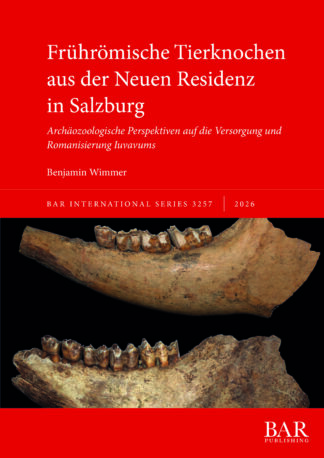
Frührömische Tierknochen aus der Neuen Residenz in Salzburg
Archäozoologische Perspektiven auf die Versorgung und Romanisierung IuvavumsWritten by Benjamin WimmerPrint Book £83.00
PDF eBook £64.00 -
Urbanism, Archaeology and Trade
Further Observations on the Gao Region (Mali). The 1996 Fieldseason ResultsWritten by Timothy Insoll with contributions by Dorian Q. Fuller, Nicky Milner, Helen Cook, Sarah Barrett-Jolley, Carol Stangroome, Rachel MacLean, Ben Roy, Maria Filomena Guerra and Paulo de Moraes FariasPrint Book £46.00
PDF eBook £32.00

