

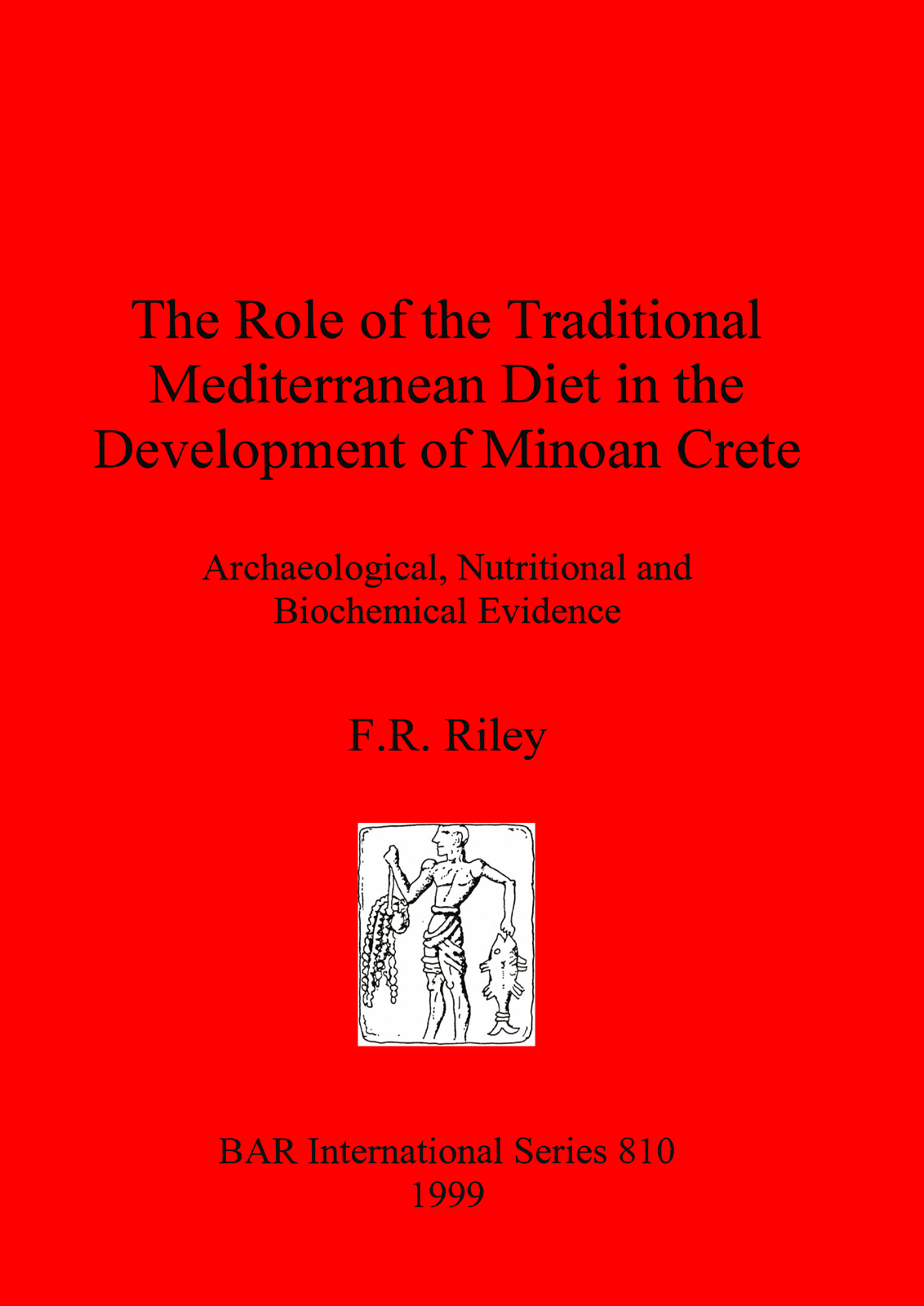
The Role of the Traditional Mediterranean Diet in the Development of Minoan Crete
Archaeological, Nutritional and Biochemical Evidence
Written by F. R. Riley
€37.20 – €52.00
Description
Archaeological evidence reveals that a diet consisting of mainly of cereals, pulses and olives, supplemented by fish and with a low percentage of animal products, was consumed on Crete in the Minoan period. Modern clinical and biochemical research indicates that this traditional ‘Mediterranean diet’ offers nutritional and health benefits depending on the balances of the components. It has been demonstrated that intake of fatty acids of vegetable (especially olive) and fish origin is associated with reduction in cardiac pathology and the development of visual and mental acuity in neonatal infants. Lipid analyses of samples of Cretan olive oil and Aegean fish (identified taxonomically from faunal remains and Minoan frescoes) confirm good levels of both essential and other dietary fatty acids. An assessment of the nutritional benefits of the Minoan diet and its possible role in the development of Minoan Crete are here investigated, using archaeological, demographic, biochemical and skeletal evidence.
You might also like...
-
Two Industries in Roman Lusitania
Mining and Garum ProductionWritten by J. C. EdmondsonPrint Book €102.00
PDF eBook €70.80 -
The Copper Age in South-West Spain
A bioarchaeological approach to prehistoric social organisationWritten by Marta Díaz-Zorita BonillaPrint Book €93.00
PDF eBook €64.80 -
The Minoan Pantheon
Towards an understanding of its nature and extentWritten by Marina L. MossPrint Book €99.00
PDF eBook €69.60 -
The Outcast Dead
Historical and archaeological evidence for the effect of the New Poor Law on the health and diet of London’s post-medieval poorWritten by Brittney K. Shields WilfordPrint Book €39.00
PDF eBook €27.60 -
Urbanism and its Impact on Human Health
A long-term study at Knossos, CreteWritten by Anna C. MolesPrint Book €98.00
PDF eBook €68.40

