

Settlement Archaeology in a Fjordland Archipelago
Network Analysis, Social Practice and the Built Environment of Western Vancouver Island, British Columbia, Canada since 2,000 BP
Written by Quentin Mackie
£22.00 – £28.00
Description
In this case study from Vancouver Island, the p-median model in a Location-Allocation analysis is applied to a network formed by transportation linkages between 238 habitation zones. It is shown that the more central places are also larger sites, but this pattern only occurs at a spatial scale difficult to reconcile with deliberate optimising behaviour. It is therefore concluded that this descriptive spatial geometry is irreconcilable with any plausible underlying generative social geometry based on either normative cultural rules or deliberate optimisation. Recognition that the built environment is an interrupted process rather than a planned, finished product, allows one to avoid ascribing to the inhabitants a totalised decision-set for site location and intensity of use based on the location-allocation solution sets. Instead, it is argued that the observed spatial patterning is better seen as the signature of long-term, wide-scale, practical activity of individuals within a landscape of habit.
You might also like...
-

Yachay Wasi
Lisa A. DunbarPrint Book £75.00
PDF eBook £58.00 -
Upland Settlement in Britain
Don Spratt and Colin BurgessPrint Book £82.00
PDF eBook £64.00 -
Patrones de asentamiento en la Bética romana
Maria del Carmen Moreno EscobarPrint Book £79.00
PDF eBook -
Landscape Stability and the Formation of Social Memory in Prehistoric Britain
Christopher DwanPrint Book £45.00
PDF eBook £35.00 -
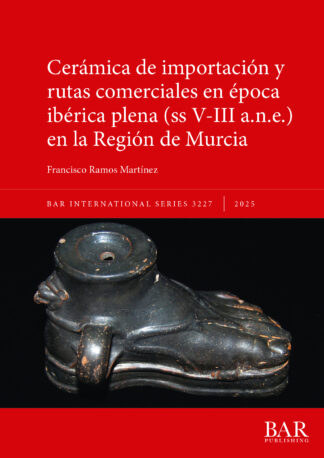
Cerámica de importación y rutas comerciales en época ibérica plena (ss V-III a.n.e.) en la Región de Murcia
Francisco Ramos MartínezPrint Book £32.00
PDF eBook £25.00

