

Late Pleistocene Deer Fossils from Corbeddu Cave
Implications for human colonization of the island of Sardinia
Written by Gerard Klein Hofmeijer
$96.60 – $121.50
Description
Corbeddu cave in Sardinia contains Late Pleistocene sediments bearing numerous deer fossils. The faunal analyses described in the present study reconstruct the role of human activities in the site formation processes based on quantitative analyses of these fossil assemblages. The collected material and a large dataset provide detailed information about the microstratigraphy of the site, which has been reconstructed using a newly developed computer program, making it possible to distinguish fossil levels. For each reconstructed level the horizontal spatial distribution, the skeletal element representation, the degree of fragmentation, the presence of associated elements, the age and sex compositions, and specific damage patterns have been analyzed. It is concluded that the assemblages cannot have been formed by natural processes alone. In the Corbeddu cave the assemblages’ relationship with feeding activity is less evident than for mainland assemblages; possibly the use of bones as tools played an important role.
You might also like...
-
Use Wear Analysis on Bone and Antler Tools of the Mackenzie Inuit
Genevieve M. LeMoinePrint Book $54.00
PDF eBook $43.40 -
Upper Palaeolithic Osseous Artifacts from Britain and Belgium
Patricia McCombPrint Book $103.95
PDF eBook $82.60 -

Viking and early medieval buildings in Dublin
Hilary MurrayPrint Book $71.55
PDF eBook $58.80 -
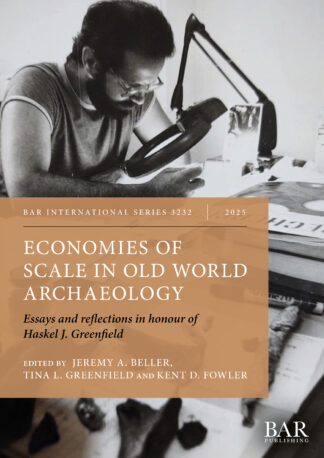
Economies of Scale in Old World Archaeology
Jeremy A. BellerPrint Book $108.00
PDF eBook $78.40 -
Freswick Links, Caithness, Parts i and ii
Colleen E. BateyMulti-volume Print Books Original price was: $124.20.$124.20Current price is: $124.20.
PDF eBook $100.80

