

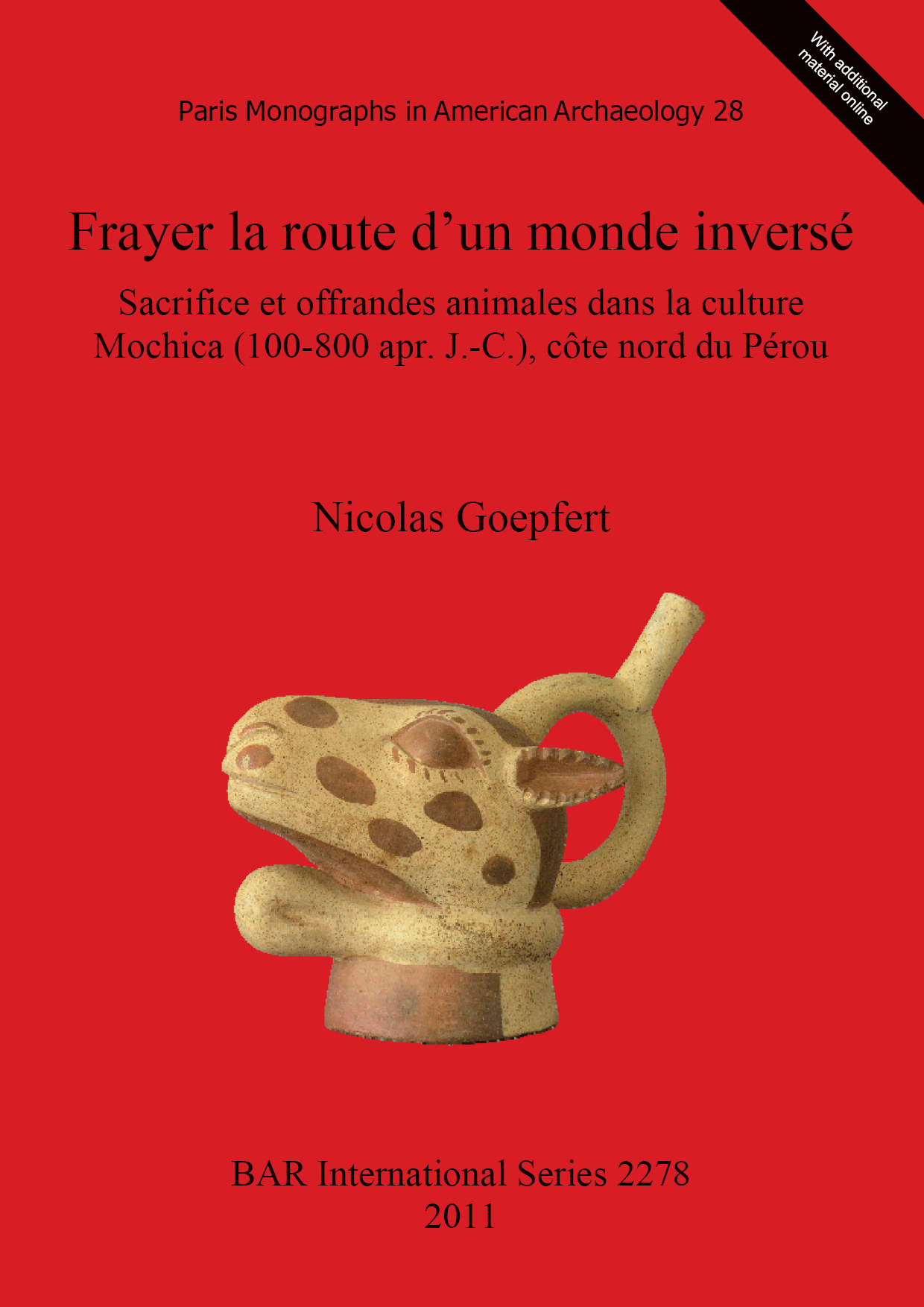
Frayer la route d’un monde inversé
Sacrifice et offrandes animales dans la culture Mochica (100-800 apr. J.-C.), côte nord du Pérou
Written by Nicolas Goepfert
€99.60 – €128.40
Description
The Moche culture (100-800 A.D.) developed on the northern Peruvian coast in an area spread over the Piura and Nepeña valleys. The zooarchaeological study of the faunal remains discovered in graves at four main ceremonial sites (Sipán, San José de Moro, El Brujo and Moche) has provided evidence of twelve sacrificed animal species: domestic taxa such as llamas, dogs and guinea pigs, and also wild species such as bats. A comparison of the zooarchaeological data with the iconographical corpus showed that animals served different ritual purposes, such as mortuary food and as guides for the deceased’s soul into the afterlife; they were also symbolically considered as mediators between the world of the living and the dead. The study also comparesarchaeological data with other sources, such as ethnohistorical texts and ethnographical testimonies leading to a better understanding of the symbolical dimension represented by Andean animals.

