


Examining the Levallois Reduction Strategy from a Design Theory Point of View
Written by Dennis M. Sandgathe
$47.60 – $59.40
Description
This research examines the potential advantages of the Levallois reduction strategy that led to its long history of use, developing a model of Middle Palaeolithic lifeways to identify factors that influenced and constrained the design of stone technology and tool kits. From this, hypotheses are developed to explain the advantages that Levallois reduction would present. These hypotheses are then tested through analysis of the morphology of the products of different reduction strategies and of tool blank selection patterns at sites in southern France. This analysis indicates that Levallois reduction would present notable advantages under conditions of restricted access to raw material. Some functional advantages may also rest in the morphology of certain Levallois products. It is also apparent that classic Levallois reduction cannot be defined in isolation from other single-surface core strategies, and that much of the advantage of classic Levallois reduction is inherent in all such strategies.
You might also like...
-
The Waterberg Plateau in the Northern Province, Republic of South Africa, in the Later Stone Age
Maria M. Van der RystPrint Book $52.65
PDF eBook $43.40 -
The Use of Living Space in Prehistory
Olena V. SmyntynaPrint Book $55.35
PDF eBook $44.80 -

Upland Settlement in Britain
Don Spratt and Colin BurgessPrint Book $110.70
PDF eBook $89.60 -
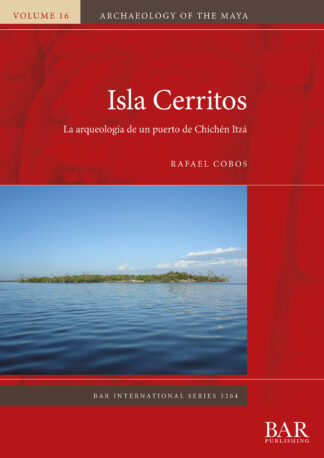
Isla Cerritos
Rafael CobosPrint Book $81.00
PDF eBook $58.80 -

Upper Paleolithic Burins
Heidi KnechtPrint Book $60.75
PDF eBook $49.00

