

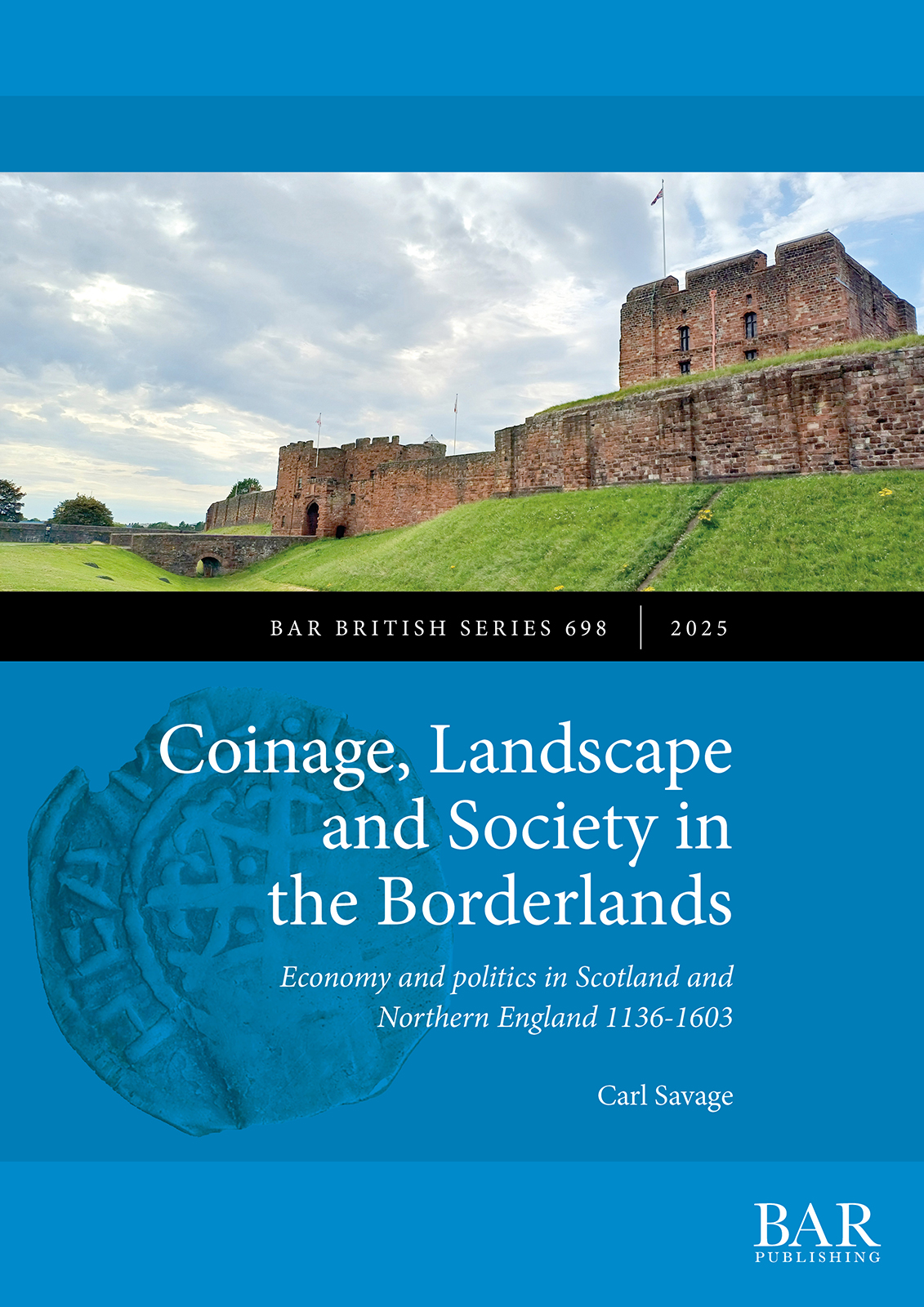
Coinage, Landscape and Society in the Borderlands
Economy and politics in Scotland and Northern England 1136-1603
Written by Carl Savage
£44.00 – £56.00
Description
In early 1136, David I of Scotland began to mint the first Scottish coins after his acquisition of Carlisle in northern England, thus beginning a complex monetary relationship between England and Scotland. This monetary and political relationship not only significantly impacted the Anglo-Scottish borderlands, but also national politics. As coinage can be more closely dated compared with other archaeological material, it offers a unique way to explore the complex political, economic and social relationships that characterise the Anglo-Scottish borders.
This book compiles a new and comprehensive dataset of medieval coins from the border region from 1136-1603, drawing together both English and Scottish data for the first time. The findings presented here offer new and important insights into the ways in which currency movement and use across the border and within the border region varied over time, and the economic, social and political drivers which underlay these patterns.
About the Author
Carl Savage is a numismatist and archaeologist, currently a Treasure Trove Officer at the National Museums Scotland. He specialises in late medieval British coinage, with a particular specialism in Scottish coinage.
Reviews
‘This is a highly original piece of work, filling a longstanding gap in British numismatics. While some individual hoard reports and surveys have touched on issues relating to the shifting relationship between the English and Scottish coinages, especially in the border area, there is nothing even remotely comparable to this study in the context of the British Isles.’ Dr Barrie Cook, British Museum
‘The author assembles an impressive collection of numismatic data, much of it previously unpublished, and subjects it to a range of statistical and interpretative techniques to generate important new insights into the intersections of coinage, power, and identity in a medieval border zone. It adds an important new case study to a growing body of literature on medieval European coin finds, which are helping us to reassess much of the received wisdom about money, coinage, and economic systems in the high and late middle ages.’ Dr Murray Andrews, UCL Institute of Archaeology
You might also like...
-
The Recessed Platforms of Argyll, Bute and Inverness
Written by Elizabeth B. RenniePrint Book £53.00
PDF eBook £37.00 -
The Niger Delta
Aspects of its Prehistoric Economy and CultureWritten by Nwanna NzewunwaPrint Book £73.00
PDF eBook £52.00 -
Two Industries in Roman Lusitania
Mining and Garum ProductionWritten by J. C. EdmondsonPrint Book £85.00
PDF eBook £59.00 -
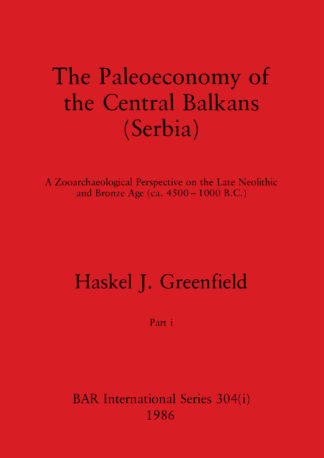
The Paleoeconomy of the Central Balkans (Serbia), Parts i and ii
A Zooarchaeological Perspective on the Late Neolithic and Bronze Age, (ca. 4500-1000 B.C.)Written by Haskel J. GreenfieldMulti-volume Print Books £102.00
PDF eBook £72.00 -
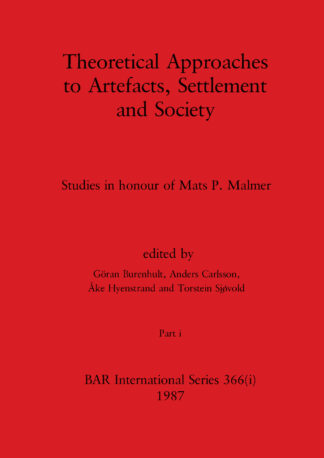
Theoretical Approaches to Artefacts, Settlement and Society, Parts i and ii
Studies in honour of Mats P. MalmerEdited by Gõran Burenhult, Anders Carlsson, Åke Hyenstrand and Torstein SjøvoldMulti-volume Print Books £108.00
PDF eBook £76.00

