

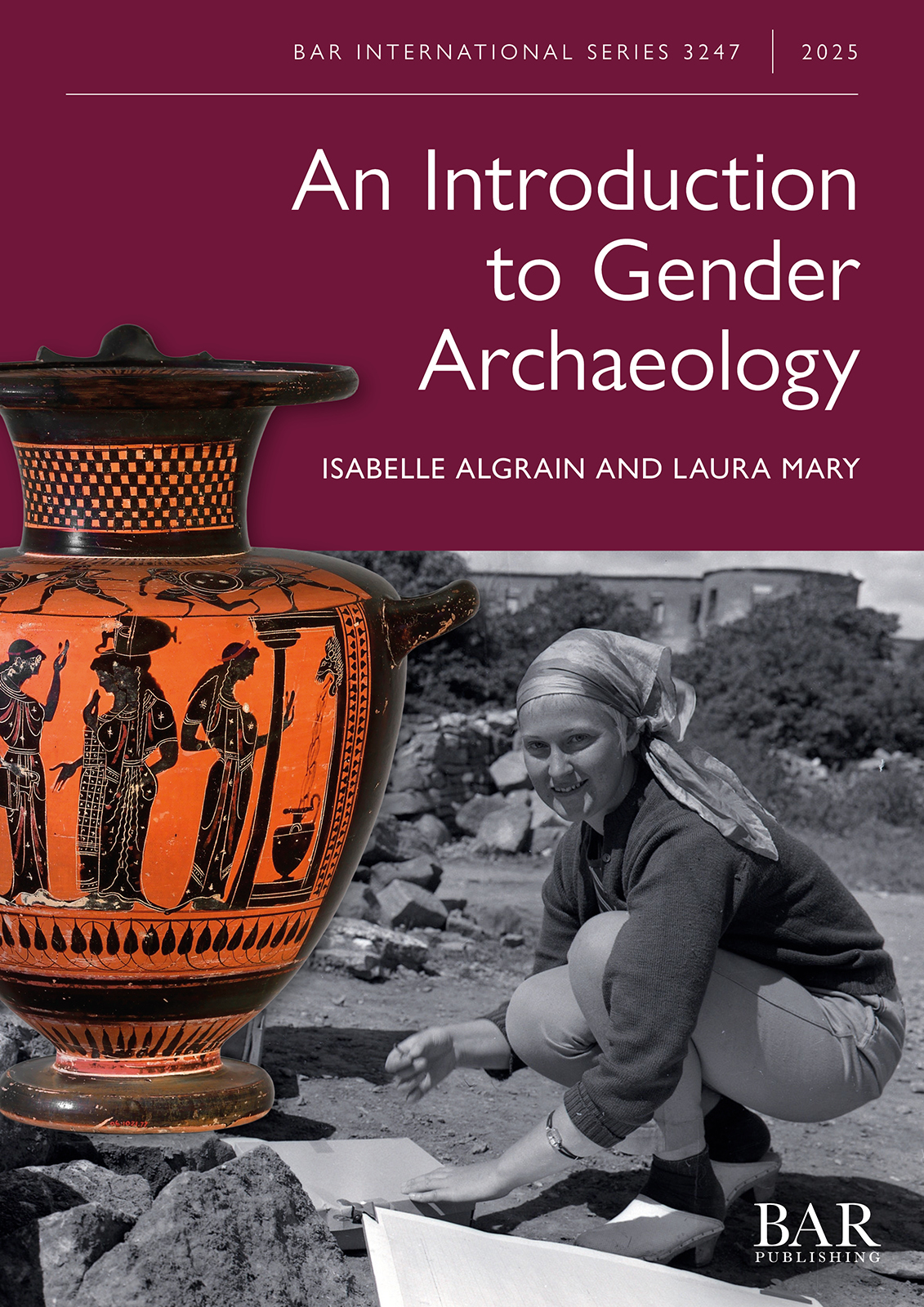
An Introduction to Gender Archaeology
Written by Isabelle Algrain and Laura Mary
$54.60 – $75.00
Description
Gender archaeology seeks to understand the influence of gender on the social, economic, political and cultural practices of ancient societies, as well as their power dynamics. Integrating gender into archaeological studies is a vital approach for more accurately reconstructing past societies and their developments. This book introduces the field to a broader audience of students and scholars, explaining the different concepts employed in gender archaeology and its links with other branches of social archaeology in a clear, accessible manner. It explores the history of gender archaeology, which emerged over 40 years ago, and its contributions, using various case studies to illustrate its development. Focusing on two key areas of gender archaeology research, the book highlights the importance of considering gender to avoid biased interpretations and sheds light on the fight against discrimination within the profession.
About the Author
Isabelle Algrain holds a PhD in Greek archaeology and a master’s degree in gender studies. She is a research associate at the Université libre de Bruxelles.
Laura Mary is an archaeologist working for the ASBL Recherches et Prospections Archéologiques. She is the founder of the Paye Ta Truelle collective and one of the three curators of the ‘Archéo-Sexisme’ exhibition.
Reviews
‘This is an essential volume for anyone who is interested in understanding the development of gender archaeology as a field. As the statement of a generation, Algrain and Mary provide us with the new go-to textbook.’ Dr Rachel Pope, University of Liverpool
‘This book places gender archaeology within a broader range of approaches that contrast with mainstream traditional archaeology – including decolonial archaeology, Black feminist archaeology, Indigenous archaeology, queer archaeology and others. This contrasts with other books on gender archaeology and is, I think, very valuable.’ Professor Ruth Whitehouse, University College London
You might also like...
-
Exploring Identities in Archaeology
Stéphanie AdroitPrint Book $67.50
PDF eBook $49.00 -
The Clay World of Çatalhöyük
Chris DohertyPrint Book $54.00
PDF eBook $43.40 -

Archaeology of the Amazonian Rubber Boom (1850-1920)
Tiago Silva Alves MunizPrint Book $60.00
PDF eBook $43.40 -
Arqueología de Género en Galicia
Celtia Rodríguez GonzálezPrint Book $84.00
PDF eBook $60.20 -
The Final Bronze Age Settlement of Casalmoro (Mantua, Italy)
Laura PauPrint Book $82.35
PDF eBook $65.80

