

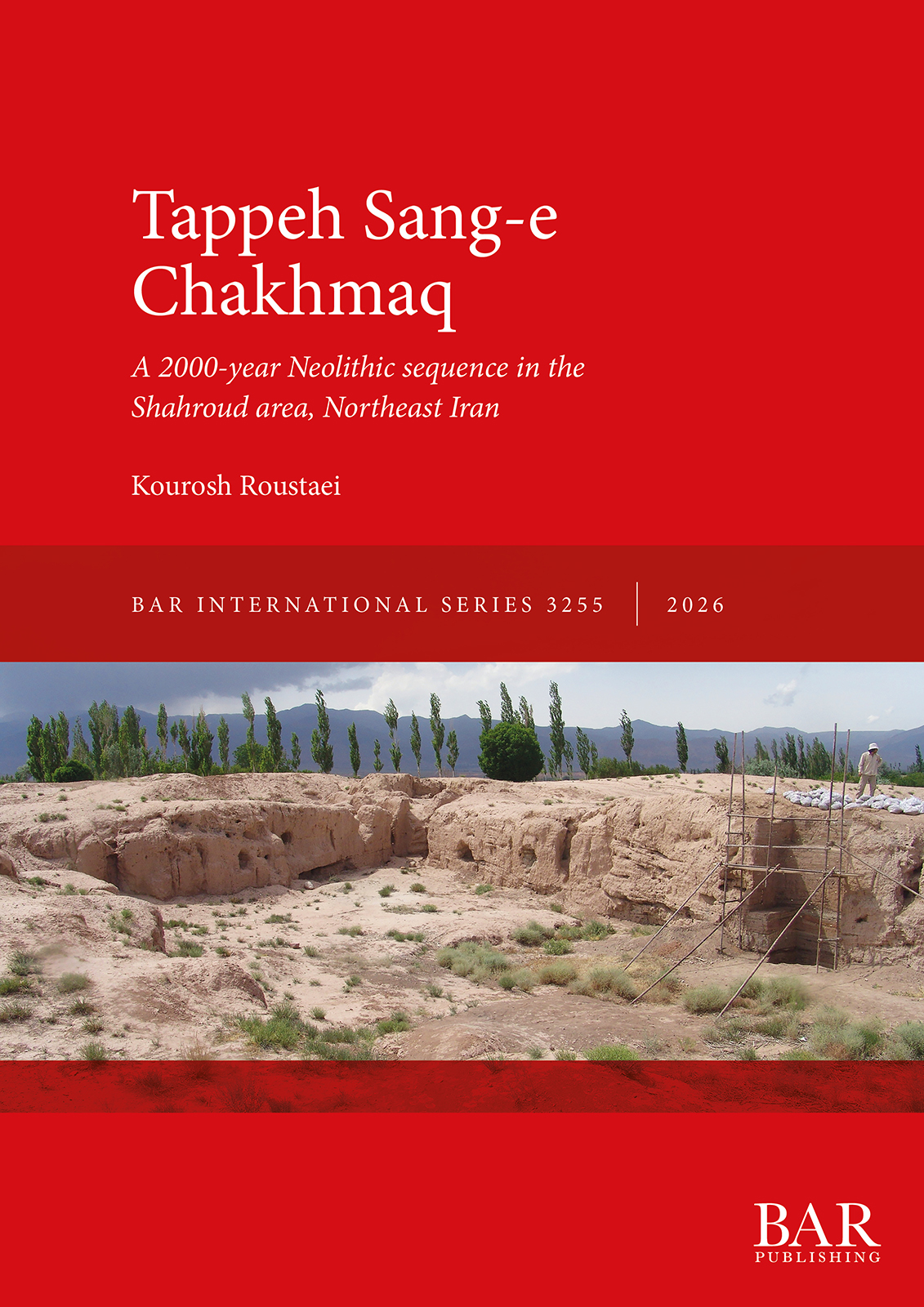
Tappeh Sang-e Chakhmaq
A 2000-year Neolithic sequence in the Shahroud area, Northeast Iran
Written by Kourosh Roustaei
£53.00 – £69.00
Description
This volume is the final report of the 2009 archaeological excavations at the twin mounds of Sang-e Chakhmaq, the type site of the Neolithic of Northeast Iran. The site’s cultural sequence spans nearly two thousand years, beginning with the establishment of the West Mound at the end of the late eighth Millennium BCE, and ending around 5300 BCE at the East Mound. Archaeological and bioarchaeological data from the West Mound suggest that the Neolithic way of life spread into Northeast Iran from the eastern Fertile Crescent. By presenting a thorough study of archaeological and bioarchaeological data, the volume articulates the various components of the “Chakhmaq Culture”, the dominating Neolithic entity of Northeast Iran. The long sequence of the site not only represents one of the few pieces of evidence for eastward Neolithic dispersal from the Zagros, but also provides ample evidence about cultural interaction with the Jeitun Culture of southern Turkmenistan, a possible derivative of the Chakhmaq Culture.
About the Author
Kourosh Roustaei is an archaeologist at the Iranian Center for Archaeological Research. His primary research interests are Neolithic archaeology, landscape archaeology, and site-formation processes.
Reviews
‘This publication will set the standard for all future work on this topic. Anyone interested in the archaeology and early history of Iran will be interested in this book, and so will the large community of academics researching the Neolithic transition more globally.’ Professor Roger Matthews, University of Reading
You might also like...
-
Tree-Ring Studies of Wood Used in Neolithic and Bronze Age Trackways from the Somerset Levels, Parts i and ii
Ruth A. MorganMulti-volume Print Books £100.00
PDF eBook £70.00 -

The Prehistory of Beer Head
Martin TinglePrint Book £37.00
PDF eBook £26.00 -
The Sardinian Neolithic: An Archaeology of the 6th and 5th Millennia BCE
Gary WebsterPrint Book £35.00
PDF eBook £24.00 -
The World of Figurines in the Neolithic and Chalcolithic Aegean
Hasan Can Gemici and Çiğdem AtakumanPrint Book £61.00
PDF eBook £42.00 -
The Paleoeconomy of the Central Balkans (Serbia), Parts i and ii
Haskel J. GreenfieldMulti-volume Print Books £102.00
PDF eBook £72.00

