

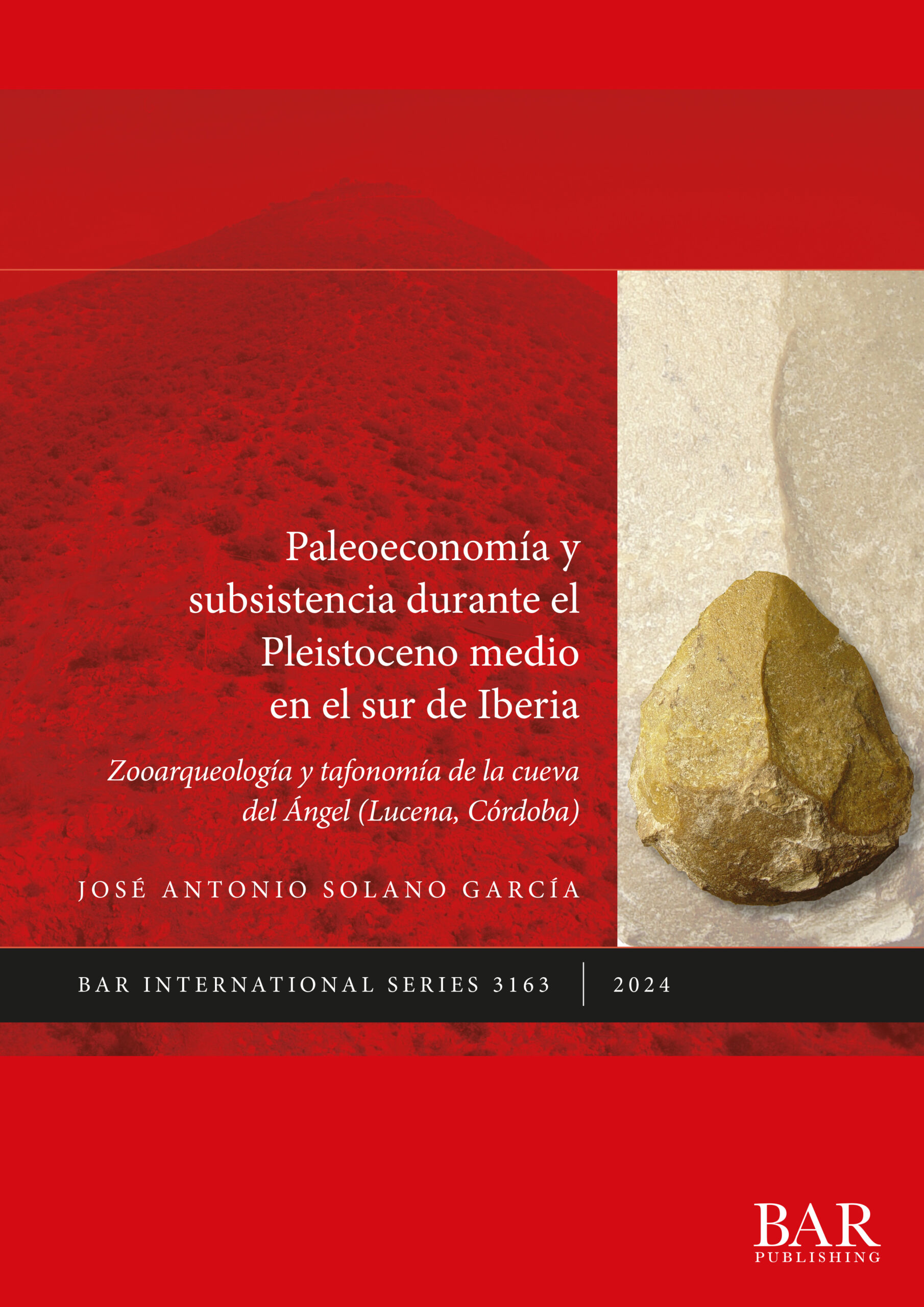
Paleoeconomía y subsistencia durante el Pleistoceno medio en el sur de Iberia
Zooarqueología y tafonomía de la Cueva del Ángel (Lucena, Córdoba)
Written by José Antonio Solano-García
£43.00 – £105.00
Description
Tradicionalmente, las sociedades preneandertales del Pleistoceno Medio se han caracterizado a menudo como poco desarrolladas, con estrategias de subsistencia muy rígidas y estáticas, centradas en la adquisición de presas monoespecíficas de grandes herbívoros y en el carroñeo regular. Sin embargo, durante la segunda mitad del Pleistoceno medio, con la emergencia del uso del fuego en la Europa mediterránea, se produjo un cambio hacia estrategias más flexibles y dinámicas, casi más propias de los humanos anatómicamente modernos. La cueva del Ángel (Lucena, España) ejemplifica esta tendencia, revelando a través del análisis zooarqueológico y tafonómico un mecanismo de intrincada amplificación económica. Este mecanismo, que combina estrategias de subsistencia tradicionales con innovadoras, desempeñó probablemente un papel crucial en el mantenimiento de la cohesión social dentro del grupo y en el equilibrio de los factores de riesgo. A lo largo de miles de años, estos grupos humanos del sur de Europa demostraron resiliencia y adaptabilidad frente a una importante variabilidad climática entre hace 350.000 y 100.000 años.
Traditionally, Middle Pleistocene pre-Neanderthal societies have often been characterized as underdeveloped, with highly rigid and static subsistence strategies focused on acquiring monospecific prey of large herbivores and regular scavenging. However, during the latter half of the Middle Pleistocene, with the emergence of fire use in Mediterranean Europe, a shift towards more flexible and dynamic strategies, reminiscent of anatomically modern humans, occurred. The Cave of the Angel (Lucena, Spain) exemplifies this trend, revealing through zooarchaeological and taphonomic analysis an intricate mechanism of economic amplification. This mechanism, combining traditional subsistence strategies with innovative ones, likely played a crucial role in maintaining social cohesion within the group and balancing risk factors. Over thousands of years, these human groups in southern Europe demonstrated resilience and adaptability in the face of significant climatic variability between 350,000 and 100,000 years ago.
About the Author
José Antonio Solano Garcia es doctor en Prehistoria y Arqueología por la Universidad de Granada (2014), donde actualmente es contratado postdoctoral y ha excavado y codirigido la Cueva del Ángel desde 2002 hasta 2019.
José Antonio Solano Garcia holds a PhD in prehistory and archaeology from the University of Granada (2014), where he is currently a postdoctoral fellow. He excavated and co-directed the Cave of the Angel project from 2002 to 2019.
Reviews
‘Very few exceptional archaeological records with chronologies around 350,000 years are being systematically studied in the Iberian Peninsula, especially in its southern region. This work fills a gap in research on the lifestyles of human groups in the Middle Pleistocene in southwestern Europe and their context with the Mediterranean.’ Professor José Yravedra Sainz de los Terreros, Universidad Complutense de Madrid
You might also like...
-
Economies of Scale in Old World Archaeology
Jeremy A. BellerPrint Book £72.00
PDF eBook £56.00 -
Exploring Identities in Archaeology
Stéphanie AdroitPrint Book £45.00
PDF eBook £35.00 -
Animals and Humans Through Time
Veronica AnicetiPrint Book £55.00
PDF eBook £43.00 -
Use Wear Analysis on Bone and Antler Tools of the Mackenzie Inuit
Genevieve M. LeMoinePrint Book £44.00
PDF eBook £31.00 -
Un Poblado de la Edad del Bronce en El Castillo
R. J. HarrisonPrint Book £44.00
PDF eBook £31.00

