

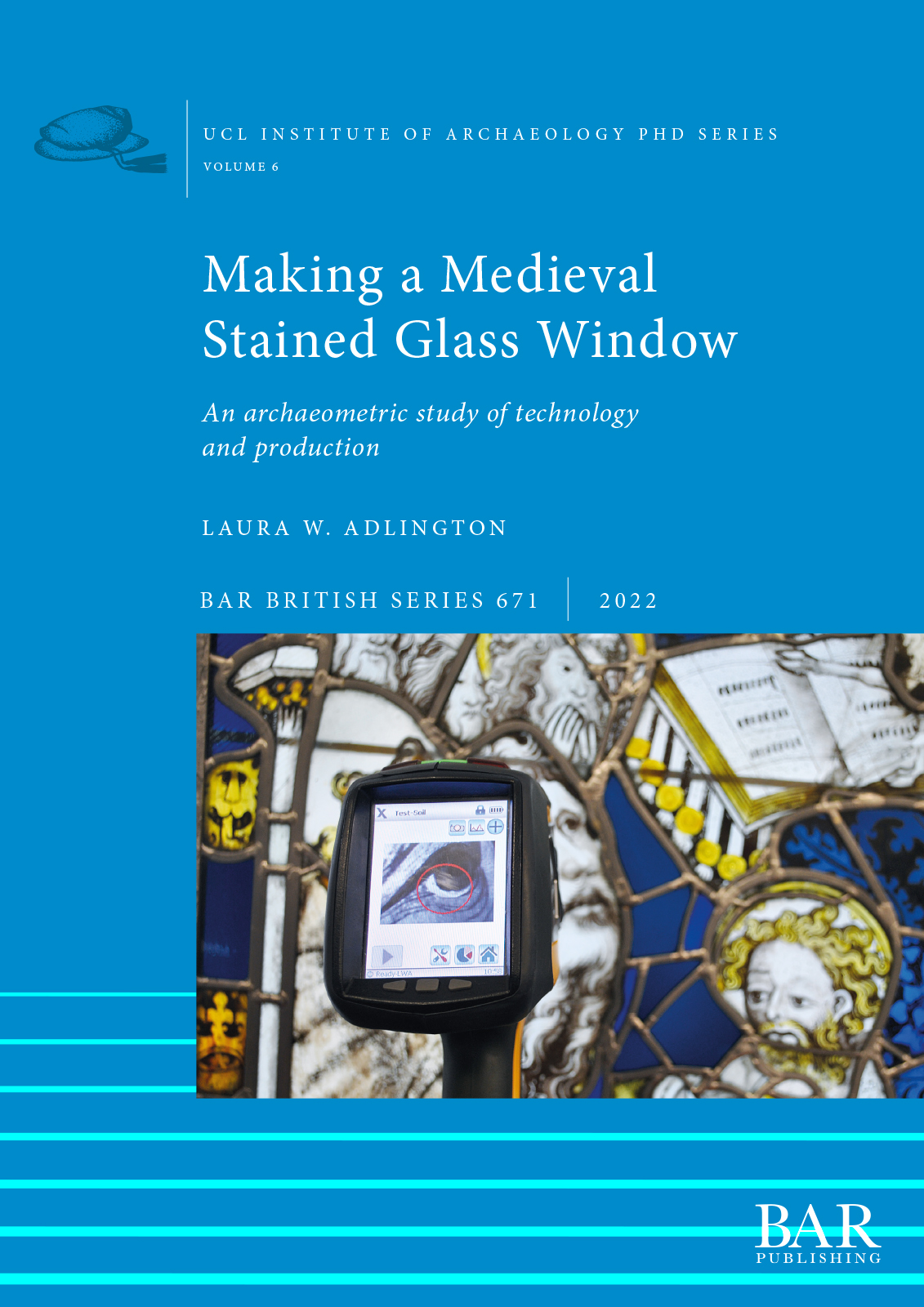
Making a Medieval Stained Glass Window
An archaeometric study of technology and production
Written by Laura W Adlington
£47.00 – £68.00
Description
Medieval stained glass windows are relatively untapped sources of information about medieval technology and production because their architectural context usually prohibits sampling for chemical analysis. This volume presents a comprehensive study of York Minster’s Great East Window (1405-1408), investigating glass-making technology and provenance, and glass-painting craft organisation. Chemical analysis relies upon established methods of elemental and isotope-ratio analysis and development of an in-situ technique, handheld/portable x-ray fluorescence (pXRF). The book also brings together historical documentation, art historical information, and meta-analysis of legacy data. Concepts borrowed from archaeological and pedagogical studies, including chaîne opèratoire, technological choice, apprenticeship and batch theory, and production models from the automobile industry, provide a new lens through which to interpret the data. Findings regard long-term relationships between York Minster and glass suppliers, the level of sophistication exhibited by medieval glassmakers, and detailed insights into the window workshop, including identification of work by different craftsmen.
About the Author
After earning her UCL-funded PhD in archaeological materials science (2019), Laura Adlington joined the ERC-funded project, GlassRoutes, as a postdoctoral researcher at IRAMAT-CEB, CNRS (Orléans). She is currently based outside Philadelphia working at Strainoptics in the non-destructive measurement of stress in glass and plastics, and she continues research on heritage materials.Reviews
The book makes important contributions both to the methodology of glass analysis and to the understanding of the production of medieval stained glass in Britain. This study represents the first application of the batch concept to medieval stained glass and so is particularly original.’ Professor Ruth Whitehouse, University College London ‘This is an exemplary case study in how to address big questions about social organisation through highly focussed interdisciplinary research. It represents a model of how to blend hard science with social science.’ Professor Andrew Reynolds, UCL Institute of ArchaeologyYou might also like...
-
Studies in Celtic Survival
Lloyd LaingPrint Book £37.00
PDF eBook £26.00 -
The medieval moated sites of South-eastern Ireland
Terence B. BarryPrint Book £66.00
PDF eBook £46.00 -
The Comparative History of Urban Origins in Non-Roman Europe, Parts i and ii
H. B. Clarke and Anngret SimmsMulti-volume Print Books £148.00
PDF eBook £105.00 -
The Coinage of the Kingdom of Bosporus, A.D. 242-341/342
N. A. Frolova and translated from the Russian by H. Bartlett WellsPrint Book £90.00
PDF eBook £63.00 -
Ship Timbers from the Islamic Site of al-Balid
Alessandro GhidoniPrint Book £64.00
PDF eBook £45.00

