

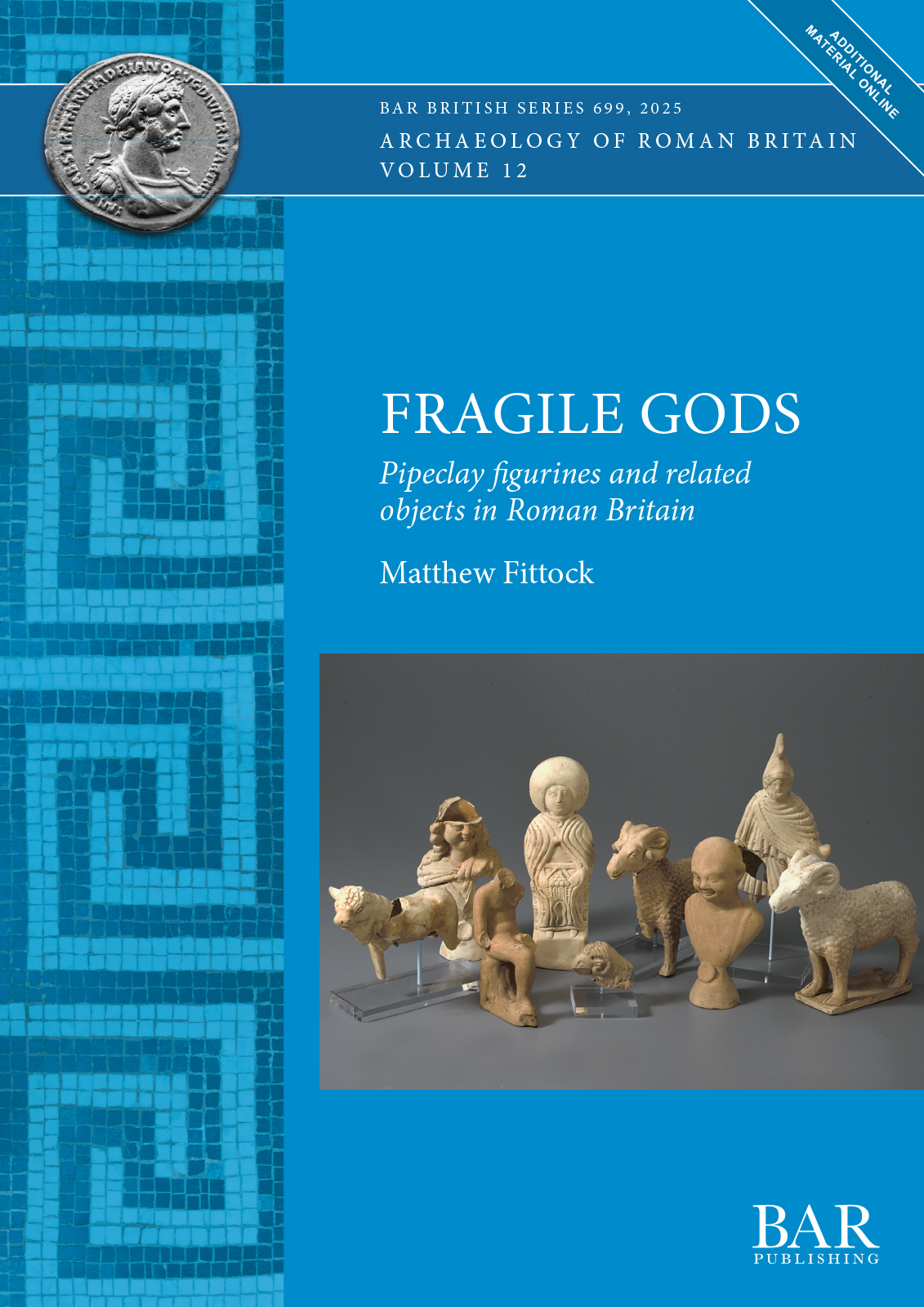
Fragile Gods
Pipeclay figurines and related objects in Roman Britain
Written by Matthew Fittock
$88.20 – $123.00
Description
Pipeclay objects produced in Gaul and the Rhine-Moselle region, including figurines, busts, shrines, animal vessels and masks, provide a valuable insight into the diverse religious beliefs and practices of the population of Roman Britain. This book provides the first comprehensive catalogue and analysis of the nearly 1000 published and unpublished pipeclay objects now known from Britannia since the late 1970s. Examination of this collection provides a detailed typological, chronological and contextual evaluation of the assemblage that highlights the range of religious practices pipeclay objects were used for, and the culturally mixed groups that used them. A key aspect of this study includes comparing the British collection with Continental assemblages to highlight distinctive regional patterns of consumption and belief between the Roman provinces. Additionally, typological and contextual comparison with metal figurines also highlights subtle but significant differences in the use and function of pipeclay and metal figurines throughout Britain.
About the Author
Matthew Fittock studied for his PhD at the University of Reading and is the British Museum’s Portable Antiquities Scheme Finds Liaison Officer for Bedfordshire and Hertfordshire.
Reviews
‘The book represents a remarkable achievement and is testimony to years of deep research and hard work. It will make a significant impact on the broader study of artefacts and small finds from Roman Britain and the North-Western provinces and will become a canonical reference work.’ Dr Iain Ferris
‘This book contributes significantly by providing a greater depth of understanding of the complexity of consumption patterns and related social and cultural trends in Roman Britain.’ Professor Ellen Swift, University of Kent
‘The book is based upon a large and comprehensive dataset, gathered from a range of appropriate sources. Beyond the presented analyses and discussions, the dataset will provide a valuable reference for future studies of religion in Roman Britain and the northwestern provinces, but particularly for studies of ceramics, which have historically not been sufficiently considered in religious studies.’ Dr Antony Lee, National Museums Scotland
You might also like...
-

The standing stones of Wales and South-West England
George WilliamsPrint Book $47.25
PDF eBook $39.20 -
The Waterberg Plateau in the Northern Province, Republic of South Africa, in the Later Stone Age
Maria M. Van der RystPrint Book $52.65
PDF eBook $43.40 -
Las personificaciones de los seres sobrenaturales mayas
Macarena Soledad López OlivaPDF eBook $128.80
Print Book $180.00 -
The World of Figurines in the Neolithic and Chalcolithic Aegean
Hasan Can Gemici and Çiğdem AtakumanPrint Book $82.50
PDF eBook $58.80 -
Beer Garden, Catholic Hospital, and Indigenous Presence
Lisa Machado and Sarah E. CowiePrint Book $69.00
PDF eBook $49.50

