

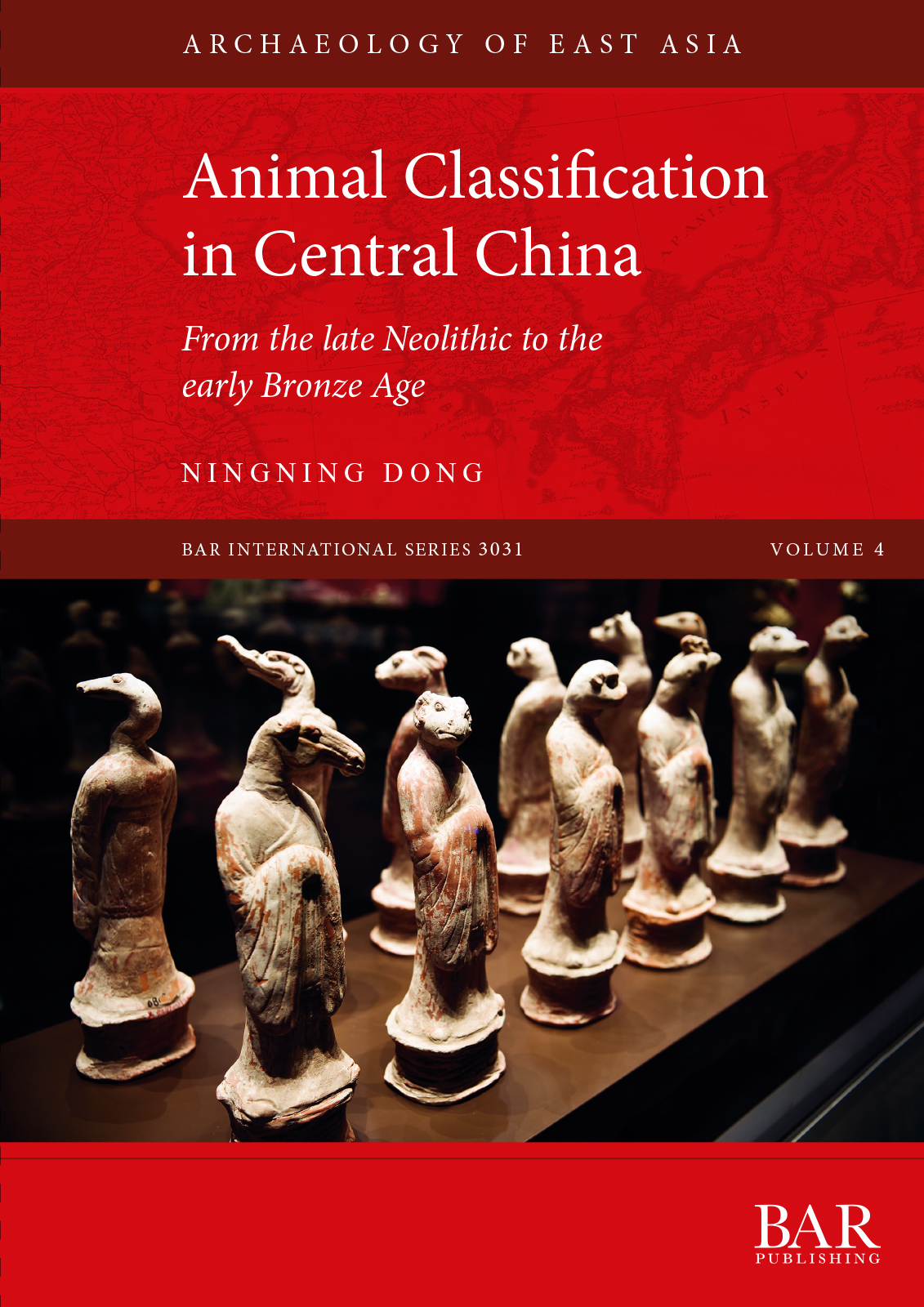
Animal Classification in Central China
From the late Neolithic to the early Bronze Age
Written by Ningning Dong
£29.00 – £40.00
Description
This monograph uses an archaeological approach to decipher folk classification of animals in ancient societies. Ningning Dong collates faunal data from three late Neolithic and early Bronze Age sites in central China and integrates multiple lines of evidence. The analyses demonstrate a folk taxonomy remarkably different from the Linnaean system. The results show that age might have served as a critical categorical filter, particularly in ritual contexts, and that the wild/domesticated dichotomy was established no earlier than the Shang dynasty. This perceptual distinction is unlikely to have been synchronised with the initial occurrence of domestication in the early Neolithic. Animal categories constituted a vital part of a broader classificatory scheme that concerned the organisation of the cosmos as a whole. This book enriches our understanding of animal categories in ancient China and further discusses the tension between etics and emics, language and action, domestic and wild.
About the Author
Ningning Dong is a junior research fellow at the Institute of Archaeological Science, Fudan University, China. She was awarded her PhD in archaeology from University of Cambridge, UK. Her main research interests include the zooarchaeology of early China, isotope analysis for husbandry strategies and subsistence in frontier regions.Reviews
‘Dong Ningning’s prominent contribution to the field makes a breakthrough in constructing animal classifications, human categories, and social conceptions associated with taxonomies in the past. The thought provoking issues Dong raises challenge the traditional approach to archaeology and her innovative methodological approach provides a solid foundation for researchers to build upon.’ You Yue, Asian Perspectives Vol 62.1, 2023 ‘It is by far the most original approach to Chinese zooarchaeology I have ever seen. The data for all of the sites in the report has been published elsewhere, but the analyses are new. The value lies in the introduction of a new approach.’ Peer reviewer ‘No one has conducted research on this topic in China before, so the overall framework and analysis can be regarded as a new way of zooarchaeological study.’ Dr Hao Zhao, Peking UniversityYou might also like...
-
Use Wear Analysis on Bone and Antler Tools of the Mackenzie Inuit
Genevieve M. LeMoinePrint Book £44.00
PDF eBook £31.00 -
Island Life
Elena Luisa PiottoPrint Book £48.00
PDF eBook £37.00 -
Zooarchaeology of the Pleistocene/Holocene Boundary
Jonathan C. DriverPrint Book £26.00
PDF eBook £19.00 -
The Zooarchaeology of the Late Neolithic Strymon River Valley
George KazantzisPrint Book £70.00
PDF eBook £50.00 -
Economies of Scale in Old World Archaeology
Jeremy A. BellerPrint Book £72.00
PDF eBook £56.00

