

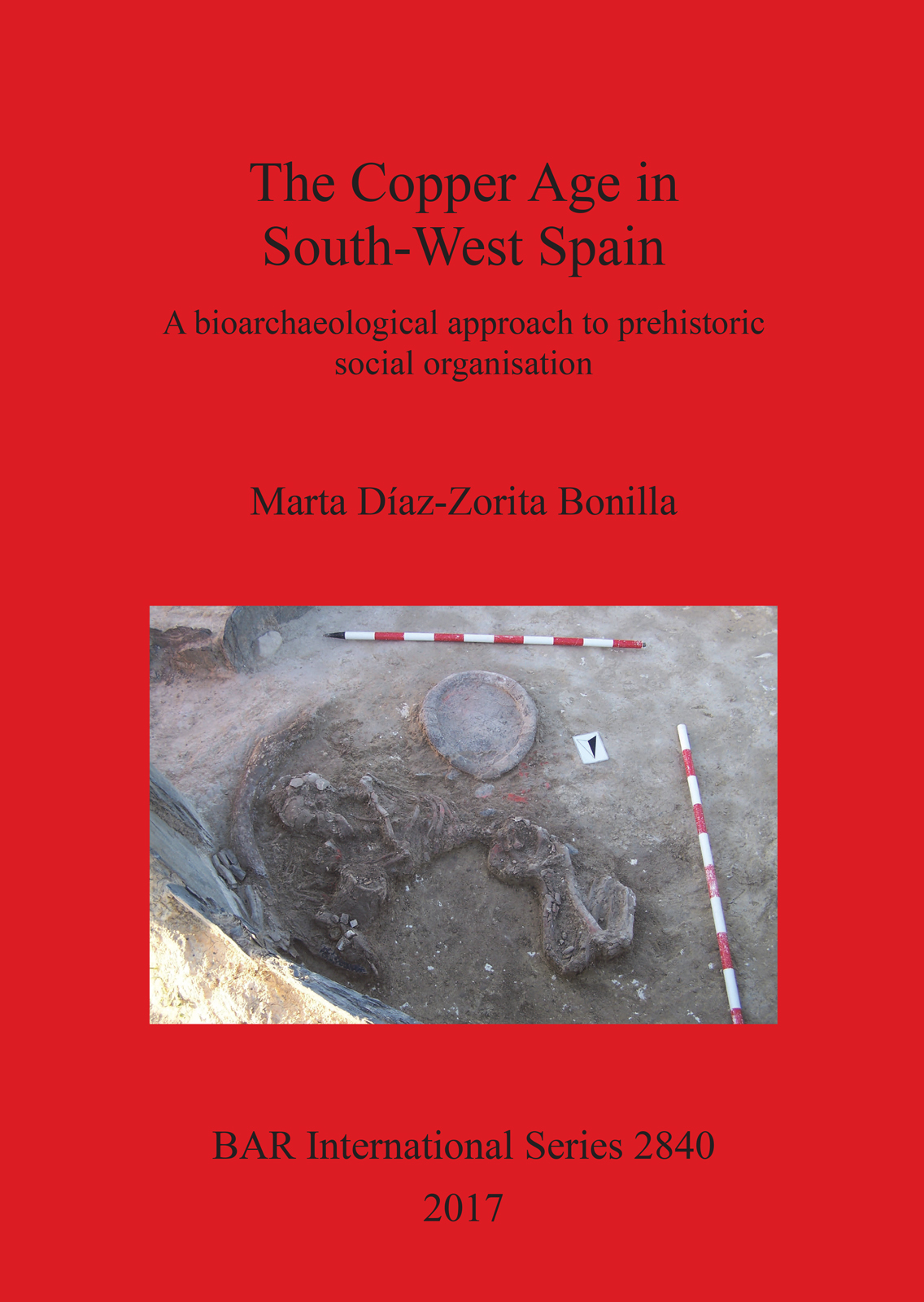
The Copper Age in South-West Spain
A bioarchaeological approach to prehistoric social organisation
Written by Marta Díaz-Zorita Bonilla
£54.00 – £77.00
Description
The prehistoric communities in Iberia have never been investigated before using a cutting-edge and multidisciplinary approach. In this research, the latest techniques are applied in order to allow a reconstruction of prehistoric social structure and social organization. Specifically, this investigation uses bioarchaeological methods, such as osteological, paleopathological and biochemical approaches (stable isotopes), in combination with funerary context to reconstruct the mortality, morbidity, dietary and mobility patterns of two human skeletal populations from the Copper Age (c. 3300-2100 cal BC). The main objective was to test whether social differences were already present during the 3rd millennium BC in southern Iberia. For this purpose, two main Copper Age sites, Valencina de la Concepción (Seville) and La Pijotilla (Badajoz), were analysed and then compared to many other contemporary sites from the same geographical location. In sum, the results of this research demonstrate the complexity of the funerary patterns in the Iberian Copper Age, providing evidence for social inequality and differentiation.
About the Author
Marta Díaz-Zorita Bonilla (PhD, MA, BA) is a bioarchaeologist specialised in the study on prehistoric human remains from the 4th-2nd millennia BC from the Iberian Peninsula. Specifically, her research aims to reconstruct social structure and mobility patterns and connections with central Europe, North Africa and the Mediterranean.Reviews
‘Díaz-Zorita Bonilla is clearly an effective advocate for Spanish bioarchaeology, and in a most useful preface to her own research she reviews the study of funerary sites and human remains in Spain across time and space. As much of this scholarship is published regionally and in Spanish, the availability of this information should encourage international scholars to access this important and largely underappreciated literature…In her closing discussion, Díaz-Zorita Bonilla outlines a blueprint for further bioarchaeological studies. I look forward to these and others that will further illuminate the multi-faceted, important past of those whose lives are documented in the Iberian Peninsula’s archaeological record.’ From the preface by Jane E. Buikstra, Regents Professor, School of Human Evolution and Social Change, Arizona State UniversityYou might also like...
-
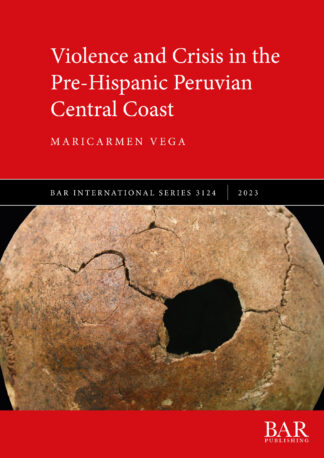
Violence and Crisis in the Pre-Hispanic Peruvian Central Coast
Written by Maricarmen VegaPrint Book £61.00
PDF eBook £42.00 -
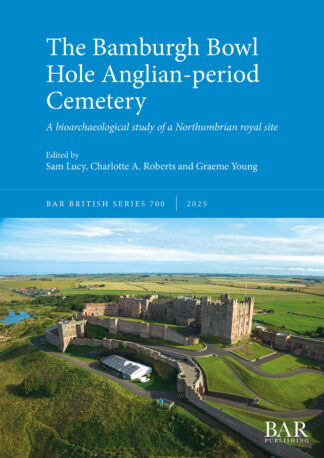
The Bamburgh Bowl Hole Anglian-period Cemetery
A bioarchaeological study of a Northumbrian royal siteEdited by Sam Lucy, Charlotte A. Roberts and Graeme YoungPrint Book £81.00
PDF eBook £63.00 -
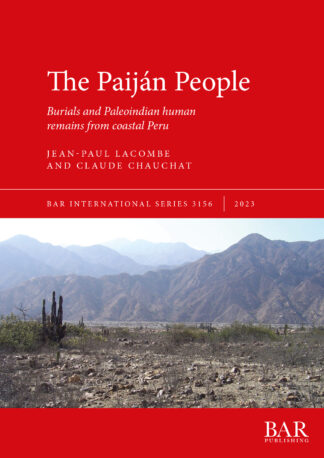
The Paiján People
Burials and Paleoindian human remains from coastal PeruWritten by Jean-Paul Lacombe and Claude ChauchatPrint Book £39.00
PDF eBook £27.00 -
Life and Death on the New Zealand Goldfields Frontier
The archaeology and bioarchaeology of the Ardrossan Street Cemetery and Gabriel Street Chinese Cemetery, Lawrence, OtagoWritten by Peter Petchey and Hallie Buckley with contributions byJane Batcheller, Rod Wallace, Les Wong and Maisie WongPrint Book £61.00
PDF eBook £47.00 -
Luxury, Living Standards and Poverty in the Cities of East-Central Europe in the 15th-18th centuries, Parts i and ii
Case studies of Wrocław and PragueEdited by Jerzy Piekalski, Jan Klápště, Agata Macionczyk, Jakub Sawicki and Paweł DumaMuli-volume Print Books £267.00
PDF eBook

