

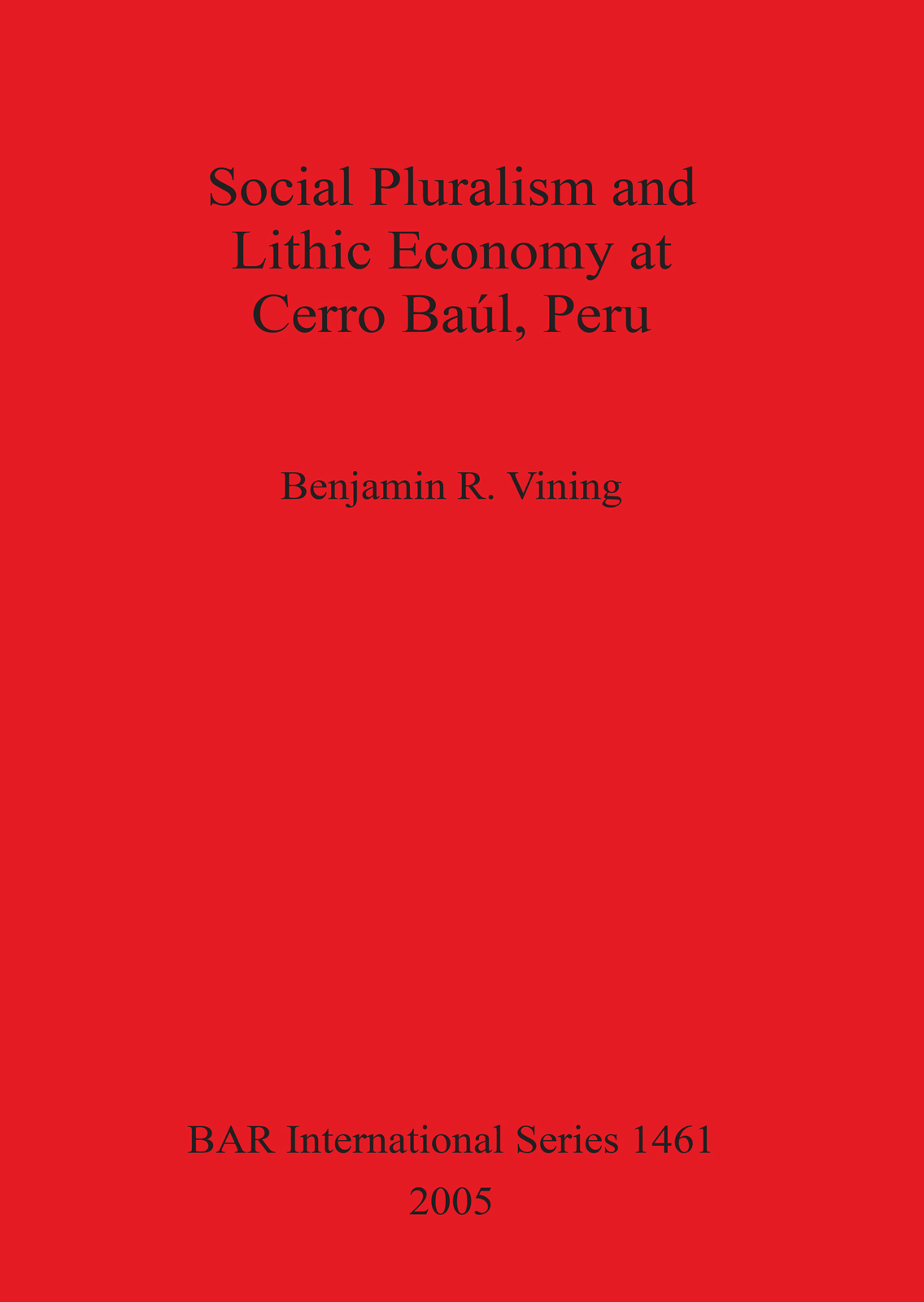
Social Pluralism and Lithic Economy at Cerro Baúl, Peru
Written by Benjamin R. Vining
£25.00 – £32.00
Description
Excavations at the site of Cerro Baúl near Moquegua, Peru have shown that this community was predominantly Wari, but in the later Middle Horizon Epoch B the occupation included a significant contingent of Tumilaca residents. This study examines over 1,979 flaked lithic artefacts from contexts that represent both Wari and Tumilaca residents. The data reveal that economic differentiation was an important factor that determined material use, and economic differentiation also strongly characterized social interaction. Differences in local and exotic material use reflect participation in socially organized procurement networks of varying scale, and economic and mechanical considerations figured strongly in implement usage. Furthermore, the membership of economic social groups crosscut ethnic boundaries. These interpretations contribute to our understanding of the socio-economic dynamics between cultural groups and support the hypothesis that class-organized inter-ethnic interaction was a probable development of the dynamic contact between the Wari and Tiwanaku expansive states during the Middle Horizon.
You might also like...
-
The Use of Living Space in Prehistory
Olena V. SmyntynaPrint Book £41.00
PDF eBook £32.00 -
The Lower and Middle Palaeolithic in Sussex
Andrew WoodcockPrint Book £90.00
PDF eBook £69.00 -
The Mousterian in Mediterranean France
Carolyn SzmidtPrint Book £74.00
PDF eBook £57.00 -
Siliceous Rocks and Prehistory
Christophe DelagePrint Book £51.00
PDF eBook £40.00 -
The Paiján People
Jean-Paul Lacombe and Claude ChauchatPrint Book £35.00
PDF eBook £27.00

